What does a Call Center Representative do?
A Call Center Representative is a professional who answers incoming calls for a business. This role involves greeting customers, answering questions, and solving problems. Representatives work in a fast-paced environment and must handle each call with care and efficiency.
Typical duties of a Call Center Representative include:
- Answering incoming calls in a friendly manner
- Assisting customers with their inquiries or complaints
- Documenting customer interactions and transactions
- Transferring calls to other departments when necessary
- Meeting performance metrics and quality standards
Call Center Representatives must have excellent communication skills and be able to work well under pressure. They often work in a team to ensure all customer needs are met efficiently and effectively. This position plays a crucial role in customer service and satisfaction, making it a key part of many businesses.
How to become a Call Center Representative?
Interested in a career as a Call Center Representative? This path offers a gateway to a dynamic workplace. It requires a blend of communication skills and technical know-how. With the right steps, anyone can succeed in this role.
To become a Call Center Representative, follow these essential steps:
- Education and Training: Start with a high school diploma or equivalent. Additional training through community colleges, online courses, or vocational schools can enhance your resume.
- Skill Development: Focus on honing communication skills, both verbal and written. Learn to handle different situations with patience and professionalism. Practice active listening and problem-solving.
- Experience Gain: Seek internships or part-time jobs in customer service. This experience helps build your resume and gives you a feel of the job.
- Certification: Consider obtaining certifications in customer service or specific software used in call centers. This adds value to your application.
- Job Application: Look for job openings in call centers or customer service departments. Tailor your resume to highlight relevant skills and experiences. Prepare for interviews by practicing common questions and scenarios.
Following these steps can lead to a successful career as a Call Center Representative. It opens doors to various industries and roles, offering a solid foundation for professional growth.
How long does it take to become a Call Center Representative?
The timeline to become a call center representative varies based on qualifications and the specific role. Most positions require a high school diploma or equivalent. Employers often favor candidates with some college education or vocational training. Some companies offer on-the-job training, while others prefer experience.
Typically, individuals can expect to complete training within a few weeks to a couple of months. For those entering with no prior experience, starting as a trainee or junior representative is common. This initial period allows for hands-on learning and skill development. With practice and proven performance, moving up to a full-time role often follows swiftly. Investing time in mastering customer service skills can accelerate career progression.
Call Center Representative Job Description Sample
A Call Center Representative is responsible for handling incoming and outgoing calls to clients and customers in a professional and courteous manner. They provide excellent customer service, address inquiries, resolve issues, and ensure customer satisfaction.
Responsibilities:
- Respond to incoming calls from customers in a timely and professional manner.
- Provide accurate information and solutions to customer inquiries and issues.
- Maintain detailed records of customer interactions, processing customer accounts, and filing documents.
- Follow up with customers to ensure their satisfaction with the provided service or product.
- Document and report any unusual situations or incidents to the supervisor.
Qualifications
- High school diploma or equivalent required; associate’s or bachelor’s degree preferred.
- Previous experience in a customer service role, preferably in a call center environment.
- Strong communication skills, both verbal and written.
- Ability to remain calm and professional in high-pressure situations.
- Proficiency in using computer applications, including Microsoft Office and call center software.
Is becoming a Call Center Representative a good career path?
A career as a Call Center Representative offers a dynamic work environment. This role involves assisting customers with their inquiries and needs. Responsibilities range from handling phone calls to resolving issues. The position demands strong communication skills and the ability to work under pressure. Many companies offer flexible schedules, making it suitable for various lifestyles.
Working in a call center has its advantages. Call centers often provide training and opportunities for career advancement. Employees can gain experience in customer service, which is valuable in many industries. Shift differentials and bonuses can increase earnings. However, it is important to consider some downsides. Call center work can be repetitive and stressful. Long hours on the phone can lead to physical strain. Employees may face difficult customers, requiring patience and composure.
Here are some pros and cons to think about:
- Pros:
- Opportunities for training and advancement
- Flexible work schedules
- Experience in customer service
- Potential for bonuses and shift differentials
- Cons:
- Repetitive and potentially stressful work
- Long hours on the phone
- Exposure to difficult customers
- Physical strain from prolonged sitting and speaking
What is the job outlook for a Call Center Representative?
If you are considering a career as a Call Center Representative, it is important to understand the job outlook. On average, there are 9,800 job positions available each year, according to the Bureau of Labor Statistics (BLS). These roles provide a stable career path for those who excel in customer service and communication. While the number of positions remains steady, the outlook does show a projected decrease of 20.6% from 2022 to 2032, suggesting the need for adaptability and continued skill development in the field.
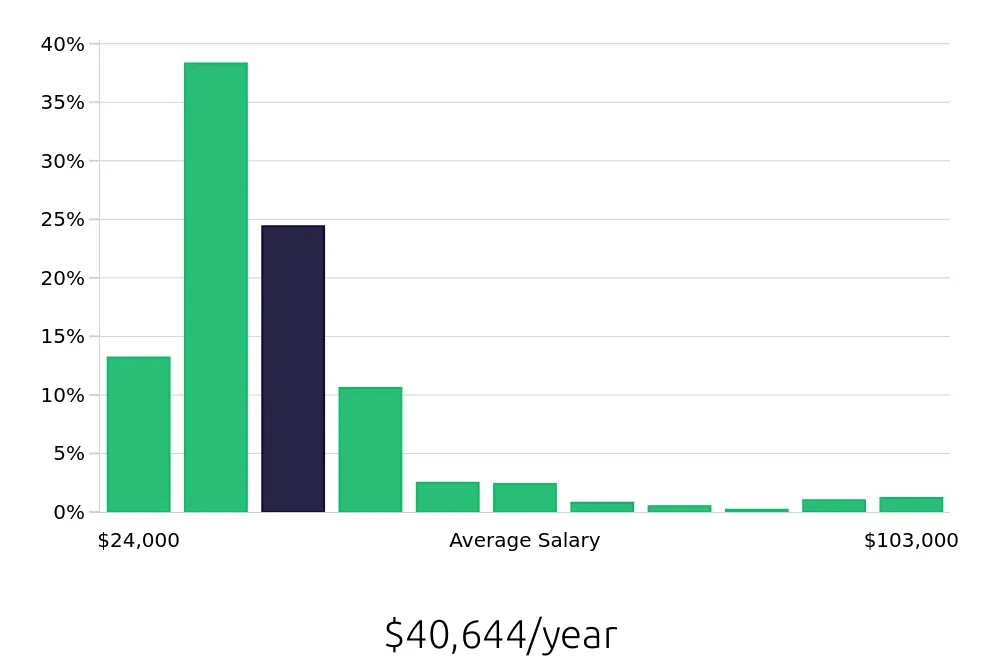
Call Center Representatives can expect an average national annual compensation of $36,680, as reported by the BLS. This figure offers a clear picture of the earning potential in this profession. Additionally, the average hourly wage stands at $17.64, making it a viable option for those seeking steady income. With continued experience and skills enhancement, there is potential for growth within this role, offering job seekers the opportunity to advance their careers.
For job seekers, entering the field of call center representation presents both challenges and opportunities. While the number of job openings may decline, the consistent demand for customer service roles ensures that skilled representatives will always find work. Staying informed about industry trends and continuously improving communication and problem-solving skills will help job seekers thrive in this evolving field.
Currently 1,232 Call Center Representative job openings, nationwide.
Continue to Salaries for Call Center Representative